Peru's Southern Coast: Paracas, Ica, Huacachina & Nazca
Peru’s Southern Coast: Paracas, Ica, Huacachina & Nazca
Penguins at dawn, a desert oasis by sunset and the Nazca Lines in between: my complete guide to the Peru southern coast, with costs, itineraries and hard-won tips.
I’ll admit it: the first time I planned a trip to Peru, the country’s desert coast was the bit I almost cut. It looked like filler between Lima and the “real” Peru of Machu Picchu and the Andes. Then a friend who’d lived in Lima told me, flatly, that skipping the Peru southern coast would be the dumbest thing I did all year. She was right. Within forty-eight hours of leaving Lima I’d floated past islands heaving with sea lions, watched flamingos stalk a lagoon where the desert falls into the Pacific, hurtled over dunes the size of office blocks in a roll-caged buggy, and stood on a hill squinting at two-thousand-year-old drawings etched into the floor of one of the driest places on Earth.
The short answer: Peru’s southern coast strings together Paracas (wildlife and a desert-meets-ocean reserve), Huacachina (a dune-ringed oasis near Ica’s pisco vineyards) and the Nazca Lines along one highway south of Lima. You can blitz it in a day, but two to four days is the sweet spot, and buses make it cheap and easy.
What’s on Peru’s southern coast, at a glance
Four stops do the heavy lifting on this route, and they conveniently line up in order along the Panamericana Sur. Here’s the cheat sheet I wish I’d had before I went:
| Stop | From Lima | The headline act | Time needed | Rough cost of the main activity |
|---|---|---|---|---|
| Paracas | 3.5–4.5 hrs by bus | Ballestas Islands boat trip + Paracas National Reserve | 1–2 days | 40–80 soles boat tour, 11 soles reserve entry |
| Huacachina (via Ica) | 4–4.5 hrs | Dune buggies, sandboarding, oasis sunsets | 1–2 days | $18–25 buggy + board combo |
| Ica | 4–4.5 hrs | Pisco bodegas and South America’s oldest vineyards | Half a day | Tastings free–40 soles |
| Nazca | 7–8 hrs | Flying over the Nazca Lines | 1 day | $100–160 all-in for the flight |
That’s the skeleton. The rest of this guide puts flesh on it: what each place is actually like, what’s worth your money and what isn’t, how the buses work, and how to stack the whole thing into an itinerary that doesn’t leave you comatose by day three.
Why this stretch of desert blew me away
Peruvians like to say their country is really three countries wearing one flag: the sierra, the selva and the costa. Most first-timers tick off the mountains around Cusco and maybe a slice of the Amazon, then fly home having never seen the third Peru at all — which is strange, because the desert starts practically at Lima’s city limits and runs, almost unbroken, two and a half thousand kilometres to the Chilean border.
And it is not empty desert. This is where the Humboldt Current slams cold, nutrient-rich water against one of the driest coastlines on the planet, and the collision produces absurd abundance: islands so thick with birds that their droppings were once Peru’s biggest export, sea lion colonies hundreds strong, penguins commuting past pelicans the size of hang gliders. Inland, the same desert that mummified the dead of the Paracas and Nazca cultures preserved their textiles, their aqueducts and their giant drawings so perfectly that archaeologists are still arguing about them a century after the first pilot looked down and thought, hang on, is that a monkey?
What sealed it for me, though, is how much you can pack into so little time. Nowhere else in Peru do world-class sights sit this close together at sea level. There’s no altitude to acclimatise to, no permits to win in a lottery, no 4am trailheads — just a smooth highway, comfortable buses and one preposterous landscape after another. After three trips down this coast I’d still go back tomorrow.
How the route works
Everything important sits on or just off the Panamericana Sur, the coastal highway south from Lima. The classic order — and the one that makes geographic sense — is Lima → Paracas → Huacachina/Ica → Nazca, then either back to Lima or onward overnight to Arequipa or Cusco. Paracas is 240-odd kilometres from the capital, Ica another 75 beyond that, and Nazca a further 140 through proper big-sky desert.
The rhythm of the days falls into place almost automatically: wildlife boats run in the morning when the sea is calm, dune buggies are best at golden hour, and Nazca flights are smoothest before lunch, when the air hasn’t yet started to shimmer and churn. Follow the route south and you’re never fighting the clock.
Paracas: where the desert falls into the sea
Paracas the town — locals still call the waterfront strip El Chaco — is a small grid of hostels, ceviche restaurants and tour desks wrapped around a harbour full of bobbing wooden boats. It exists for two reasons: the Ballestas Islands offshore and the national reserve next door. I rolled in expecting a tourist trap and left three days later, reluctantly, having eaten the best scallops of my life.
The Ballestas Islands boat trip
Everyone calls the Ballestas “the poor man’s Galápagos,” which manages to undersell them. Yes, the two-hour boat tour costs less than a sandwich in the actual Galápagos — figure 40 to 80 soles depending on season and how you book, plus a few soles of port tax — but there’s nothing budget about what you see.
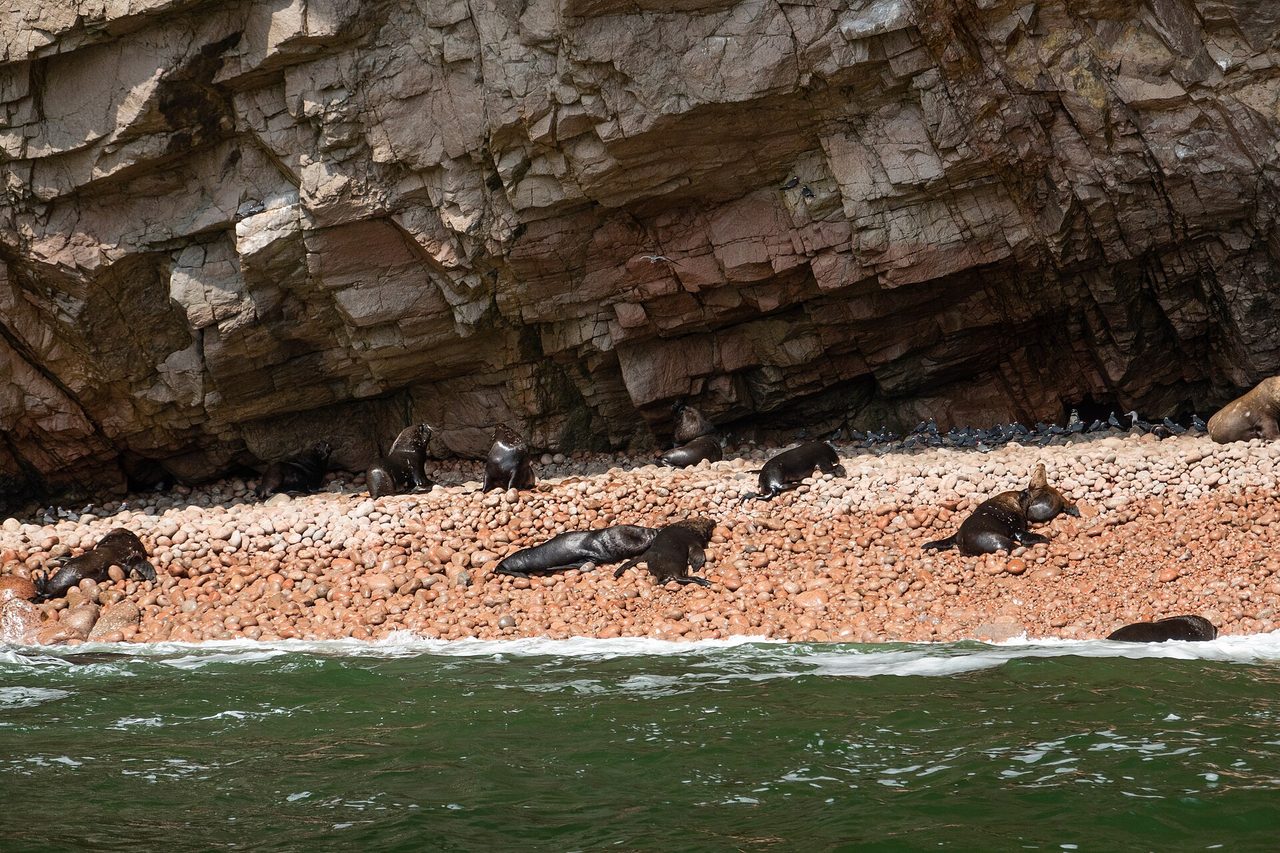
The speedboats head out at 8am, when the Pacific is at its calmest, and within twenty minutes the smell hits you before the islands do: a rich, ammoniac funk of several hundred thousand seabirds going about their business. Guano from these islands was such valuable fertiliser in the nineteenth century that Peru fought wars over bird droppings, and watching the sky wheel with cormorants, boobies and Inca terns, you understand the arithmetic. Sea lions haul out on every ledge, barking and sparring and flopping over each other like overfilled water balloons. Humboldt penguins — small, dapper, endangered — porpoise alongside the boat if you’re lucky. On my second trip a pod of dolphins overtook us, and the entire boat, guide included, lost its collective mind.
You never set foot on the islands; boats just idle close while everyone’s camera fills up. Take the first departure of the day, sit on the left side going out if you can, and bring a windproof layer because the morning sea air cuts colder than you’d expect on the edge of a desert.
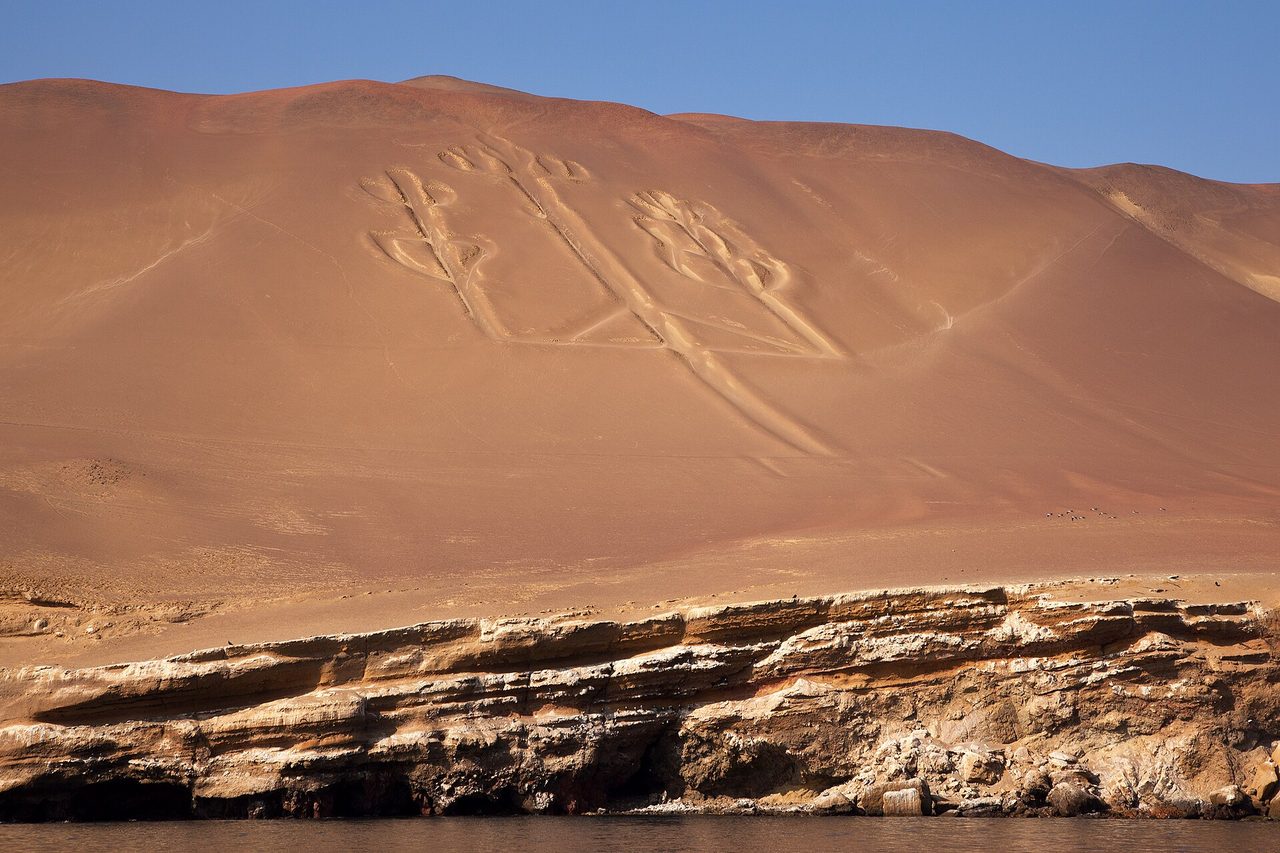
On the way out, every boat pauses in front of the Candelabra, a 180-metre trident gouged into the sandy hillside of the peninsula. Nobody knows who made it or why — theories run from a navigation marker for sailors to a representation of a hallucinogenic cactus, and the carbon dating only tells us people were leaving pottery at its base around 200 BC. It’s a fitting opening act for a region whose main attraction is also a giant unexplained drawing.
Paracas National Reserve
The reserve is the bit most day-trippers shortchange, and it was my favourite place on the entire coast. It protects a hammerhead-shaped peninsula where 335,000 hectares of dunes, cliffs and red-sand beaches collide with a cold, furious ocean — a landscape so stripped and elemental it feels closer to Mars with a sea view than to anything else in Peru.
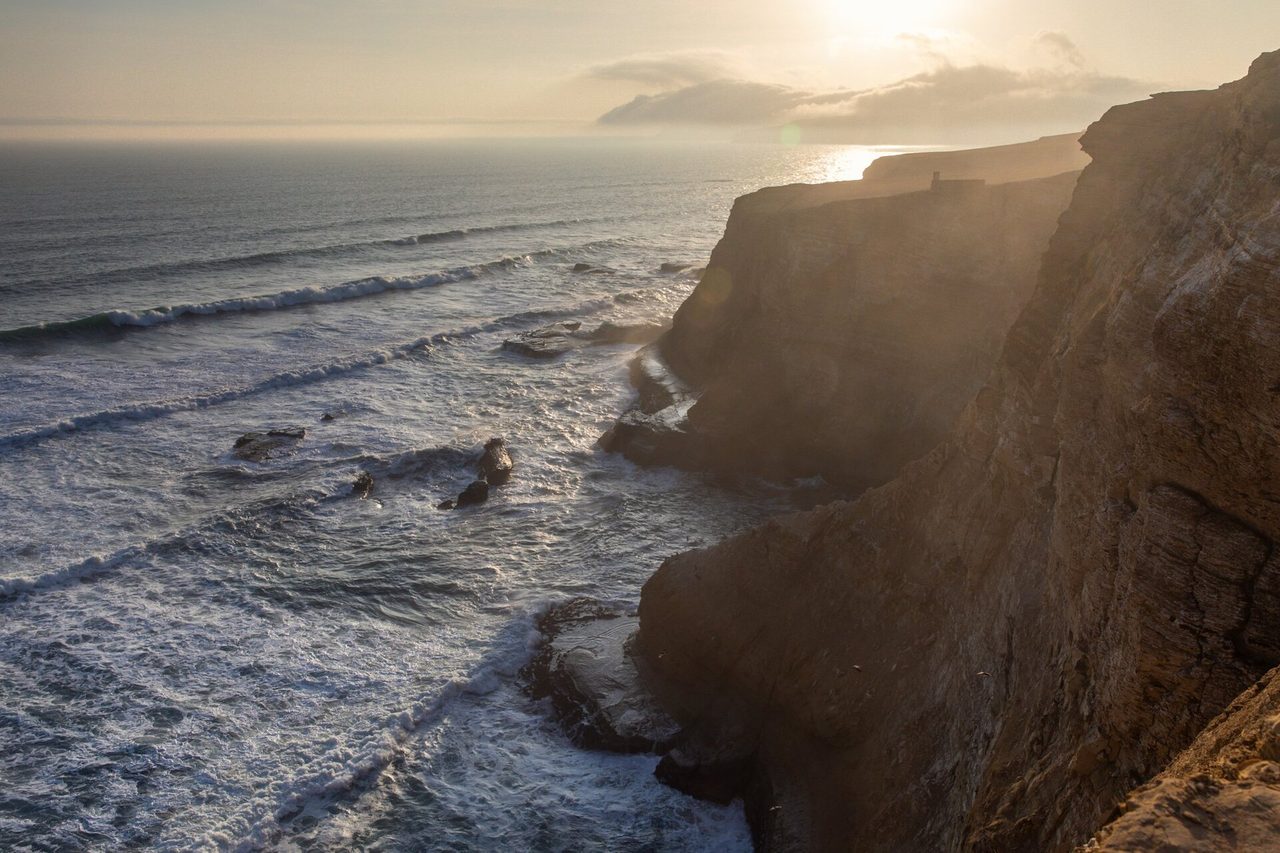
Entry costs 11 soles, and you have three ways to see it. The standard minibus tour (around 40 soles) hits the viewpoints in a brisk two to three hours. Better, if you can stretch to it, is a private buggy or taxi tour where you control the stops. Cheapest and most fun, if your legs are up for it, is renting a bicycle in town for about 25 soles and riding the 30-kilometre loop yourself — glorious freedom, with the caveat that the afternoon wind will try to sandblast you home. The reserve is named for those winds: para-cas, “raining sand” in Quechua, the same gritty gale that has been polishing this peninsula for millennia.
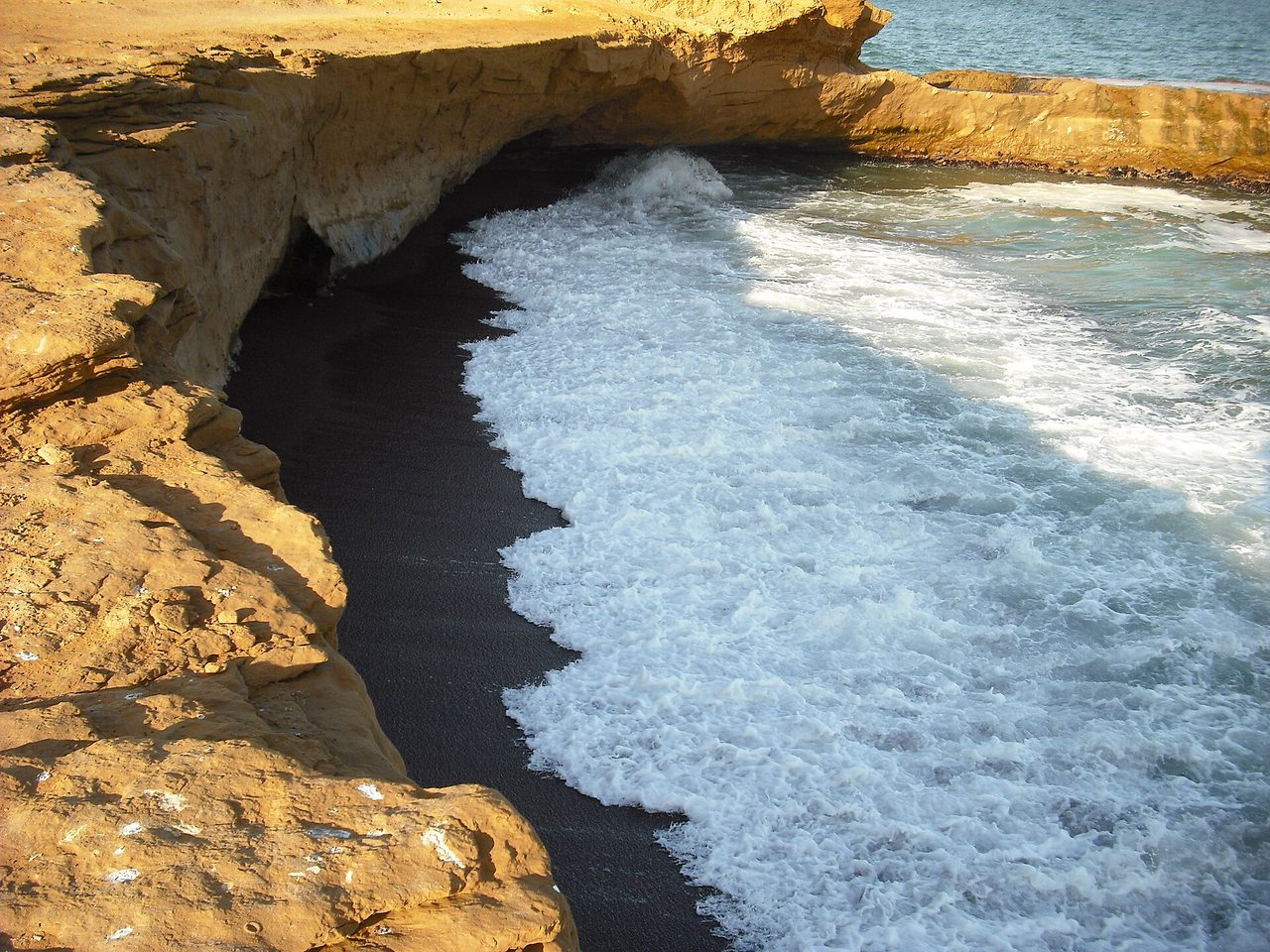
Two stops justify the trip on their own. Playa Roja is a crescent of dark crimson sand — crushed pink granodiorite off the cliffs, churned and re-deposited by the surf — that looks colour-graded even with your sunglasses off. And La Catedral is a colossal sea stack that lost its famous arch to the 8.0 earthquake that levelled Pisco in 2007 but gained a brutal, shark-tooth grandeur in the bargain. Flamingos stalk the lagoons near Lagunillas in season; local lore says the sight of them lifting off this very bay gave General San Martín the red-and-white of the Peruvian flag.
Beyond the obvious in Paracas
Most people do the boat, do the reserve, and roll on south. Stay an extra half-day and Paracas gets more interesting. The Museo de Sitio Julio C. Tello, just inside the reserve gate, holds the astonishing output of the Paracas culture: textiles two millennia old with colours that still look wet, and the elongated, deliberately-shaped skulls that launched a thousand bad alien documentaries. An hour inland, Tambo Colorado is one of the best-preserved Inca administrative complexes on the coast — the familiar trapezoidal doorways and niches, except built in golden adobe instead of granite, still wearing patches of original red and yellow paint. And in El Chaco itself, order the scallops — conchas a la parmesana at a waterfront place, ideally Inti Mar, which farms its own — and thank me later.
One honest note: Paracas town is not a beach resort. The bay is for boats, the wind picks up most afternoons, and by 9pm the place is asleep. That’s its charm. If you want nightlife, it’s waiting one stop down the road.
Huacachina and Ica: dunes, buggies and pisco
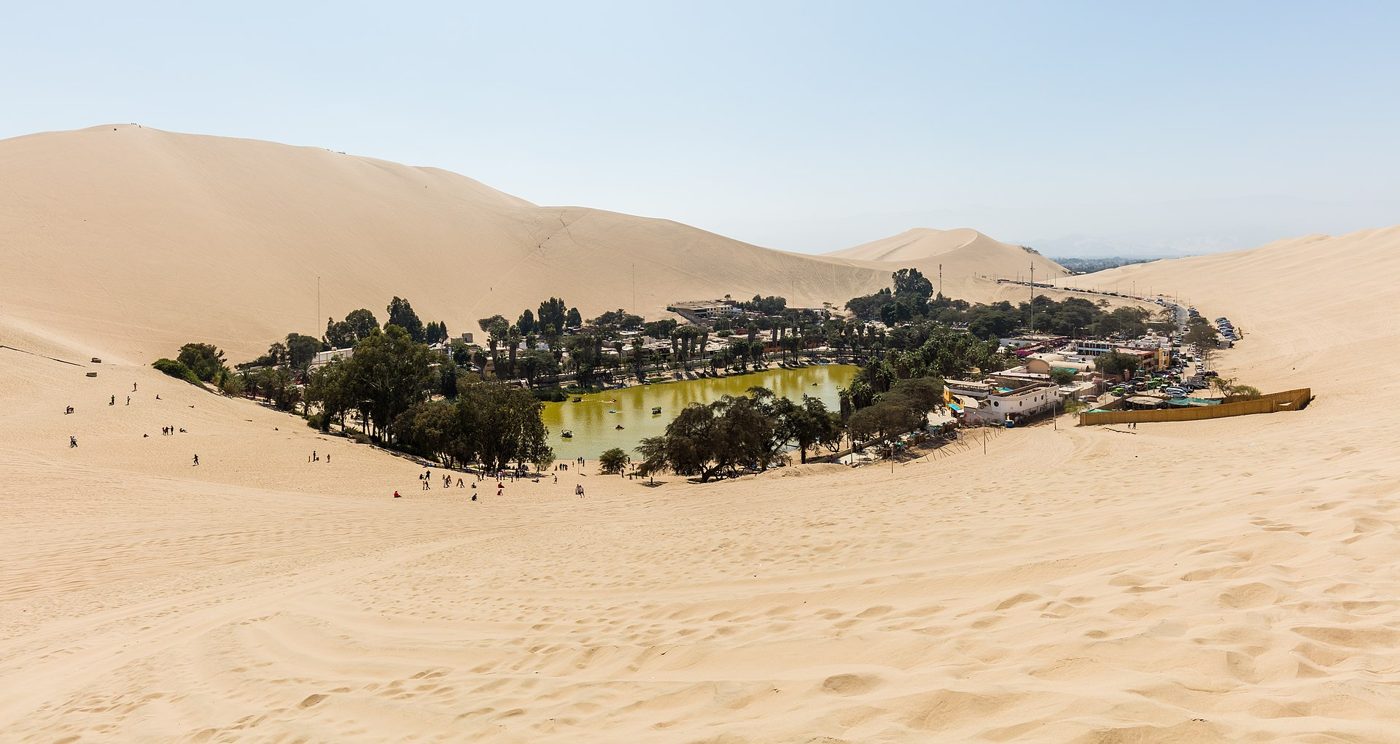
An hour south of Paracas, the road swings inland to Ica, a workaday city of 250,000 that most travellers see only from a bus window — which is a mistake I’ll correct in a minute. First, the postcard: five kilometres west of the city centre, over a ridge of sand, sits Huacachina, a palm-fringed lagoon wrapped by a horseshoe of dunes that rise like a frozen ocean a hundred metres over the rooftops. It is South America’s only true desert oasis, it’s on the back of the 50-sol note, and no photograph prepares you for how theatrical it looks in real life.
Let me set expectations, because this matters: Huacachina the village is tiny and unapologetically touristy. You can walk the lagoon’s full perimeter in fifteen minutes, the water is greener than you’d choose, and every second doorway sells the same buggy tour. None of that matters. You are not here for the village. You are here for the sand around it — and the sand is extraordinary.
Dune buggies and sandboarding
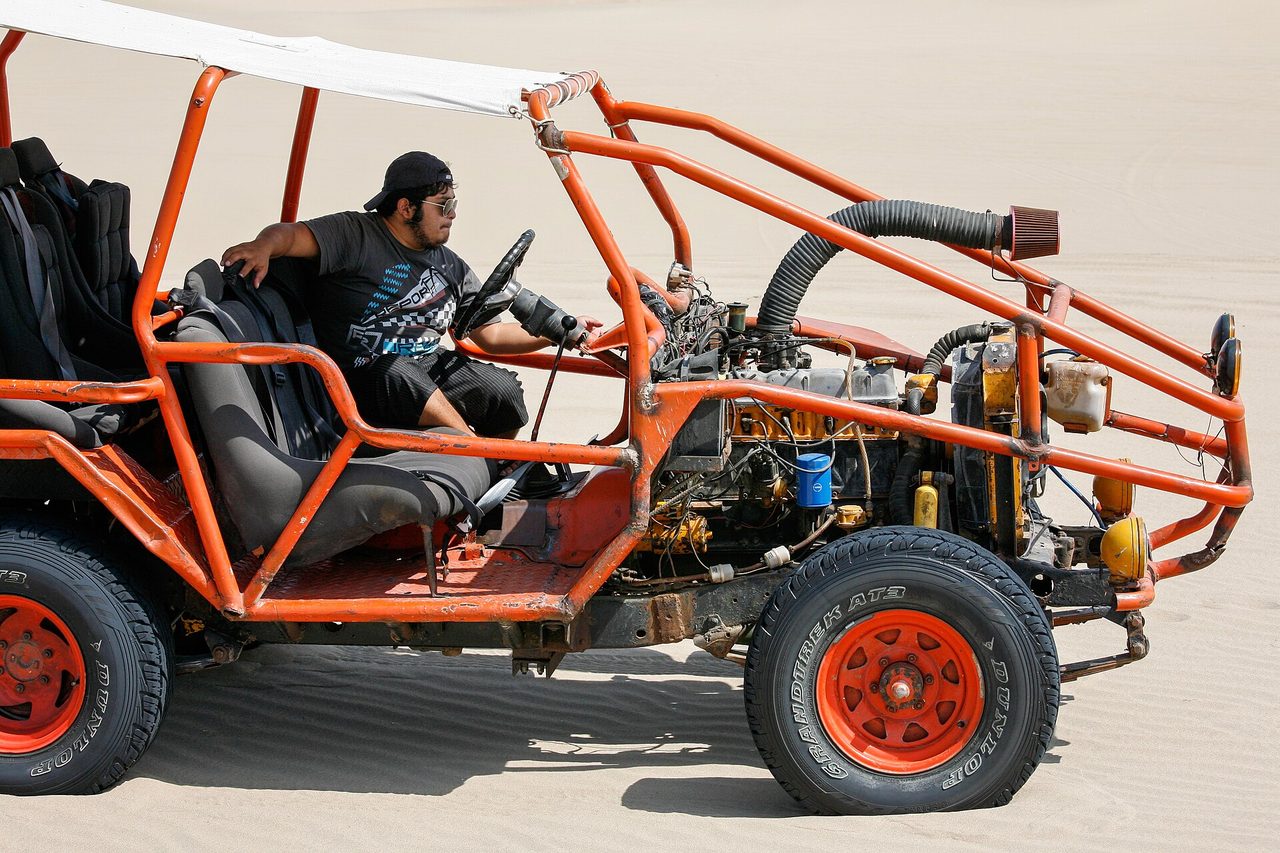
The signature Huacachina experience is two hours in a roll-caged, V8-engined areneros — a dune buggy — driven by someone who has clearly missed his calling as a rally driver. The standard group tour costs $18–25 (roughly 70–90 soles) plus a small dune-park entry fee of a few soles, and alternates between rollercoaster runs over the slip faces — genuine stomach-in-mouth stuff, the whole buggy airborne for half-seconds at a time — and stops at progressively bigger dunes for sandboarding — comfortably among the best adventure activities in Peru.
About the sandboarding: forget the Instagram videos of people carving down standing up. Waxed plywood boards, ankle-deep powder sand and zero bindings mean that standing is how people crack collarbones. Ride it like a toboggan, belly down, elbows tucked, mouth firmly shut, and you’ll hit genuinely silly speeds down faces that run a hundred metres and more — all of the thrill, a fraction of the orthopaedics. The 4pm tour is the one you want: the heat softens, the light turns syrupy, and the driver leaves you on a high crest as the sun drops behind the dune sea. Watching that sunset, beer in hand, sand in every pocket, is one of the cheapest world-class experiences in Peru.
If you’d rather skip the engine, you can simply climb the dunes from the village — free, brutal on the calves, fifteen to twenty minutes of two-steps-up-one-slide-back — and have the same sunset to yourself with the oasis glowing below. Paragliders run tandem flights over the dune field for about $100 when the wind cooperates, and after dark the dunes flip into one of the better stargazing platforms on the coast.
The party question
Huacachina has become the southern coast’s backpacker party stop, anchored by a couple of famously raucous hostels — Wild Rover’s pool bar does not believe in early nights — plus calmer options like Banana’s Adventure for people who want the buggy-and-bonfire version without the 3am techno. Here’s the trick: the party is entirely opt-in. Stay on the quieter west side of the lagoon, or in Ica proper, and Huacachina at dawn — still, pink, utterly silent except for doves in the palms — is a different planet from Huacachina at midnight.
Ica: pisco, wine and the best museum you’ll almost skip
Here’s the bit travellers miss while sprinting between dunes and geoglyphs: Ica is the centre of Peruvian winemaking, and the vineyards around it have been producing since the 1540s — the oldest wine tradition in South America. This is the home turf of pisco, the clear grape brandy that fuels the national cocktail, and the bodegas range from gleaming industrial operations to dirt-floor family affairs where the juice still ferments in waist-high clay botijas.
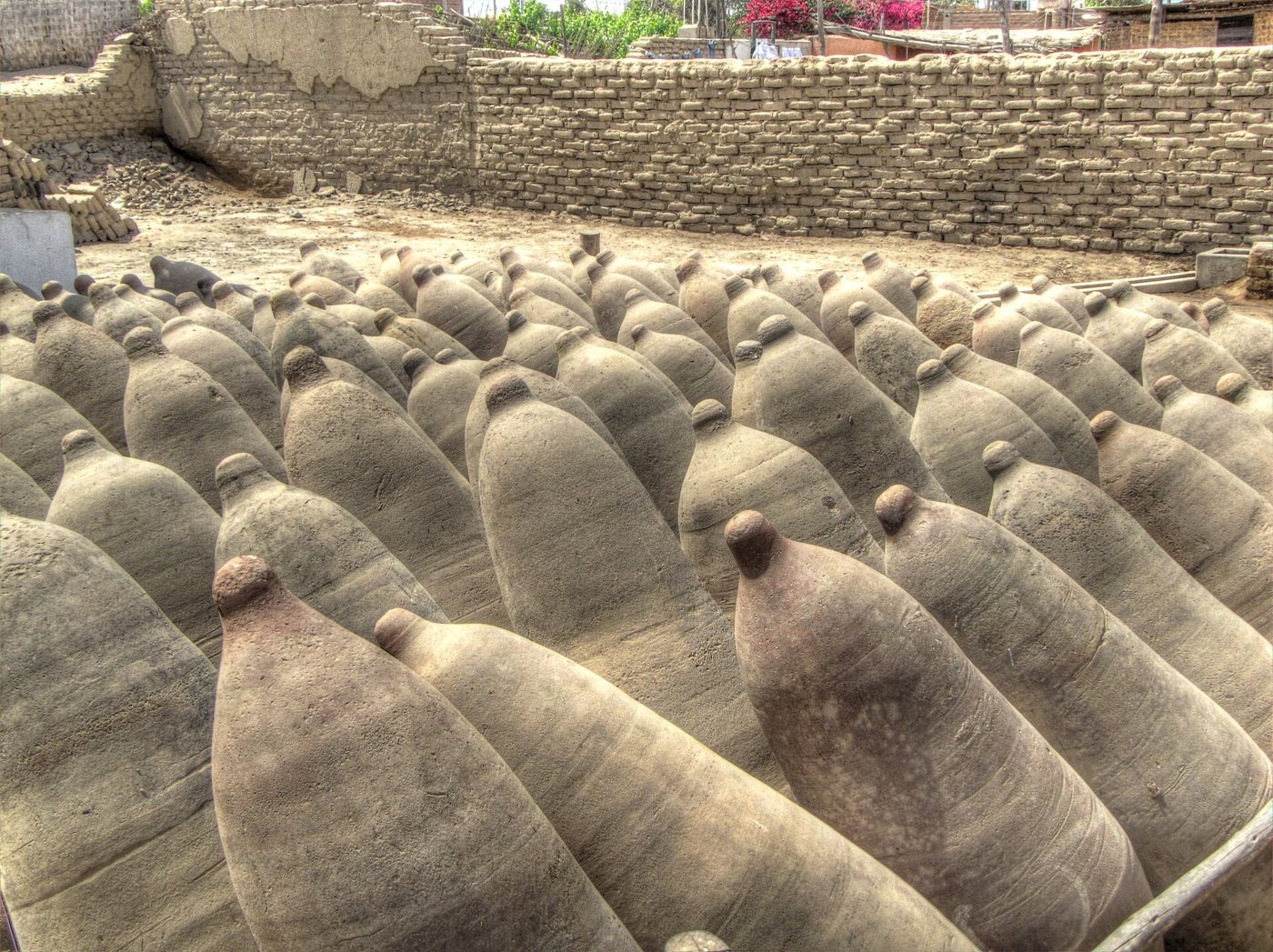
Tacama, twenty minutes from town in a salmon-pink colonial hacienda, runs polished tours past vines first planted in the sixteenth century; La Caravedo distills the elegant Pisco Portón on equipment dating to 1684; and El Catador keeps things rustic and cheerfully chaotic, with tastings poured straight and generous. A taxi tour of two or three bodegas runs 60–100 soles and fills a happy afternoon. If you’re around in early March, the Vendimia harvest festival takes over Ica with grape-stomping queens, concerts and a great deal of free-flowing product. For more on what you’ll be drinking — and the ceviche you should be eating beside it — see my full guide to Peruvian food and drink.
Ica also hides the Museo Regional, a dusty-looking box on a suburban street holding one of Peru’s best small collections: Paracas textiles, Nazca pottery, trepanned skulls and desert mummies, with barely another visitor in sight. Forty minutes there will double your appreciation of everything you see in Nazca the next day.
Nazca: the lines, the flight, and the town that surprised me
Two and a half hours south of Ica, the desert opens into a vast, flat pampa where, sometime between 200 BC and 600 AD, people swept aside the sun-darkened surface stones to expose pale ground beneath, drawing figures so large that no one on foot can see them whole: a hummingbird the length of a football pitch, a monkey with a spiralled tail, a condor, a spider, an owl-faced figure waving from a hillside that everyone calls the astronaut against the archaeologists’ better judgment.
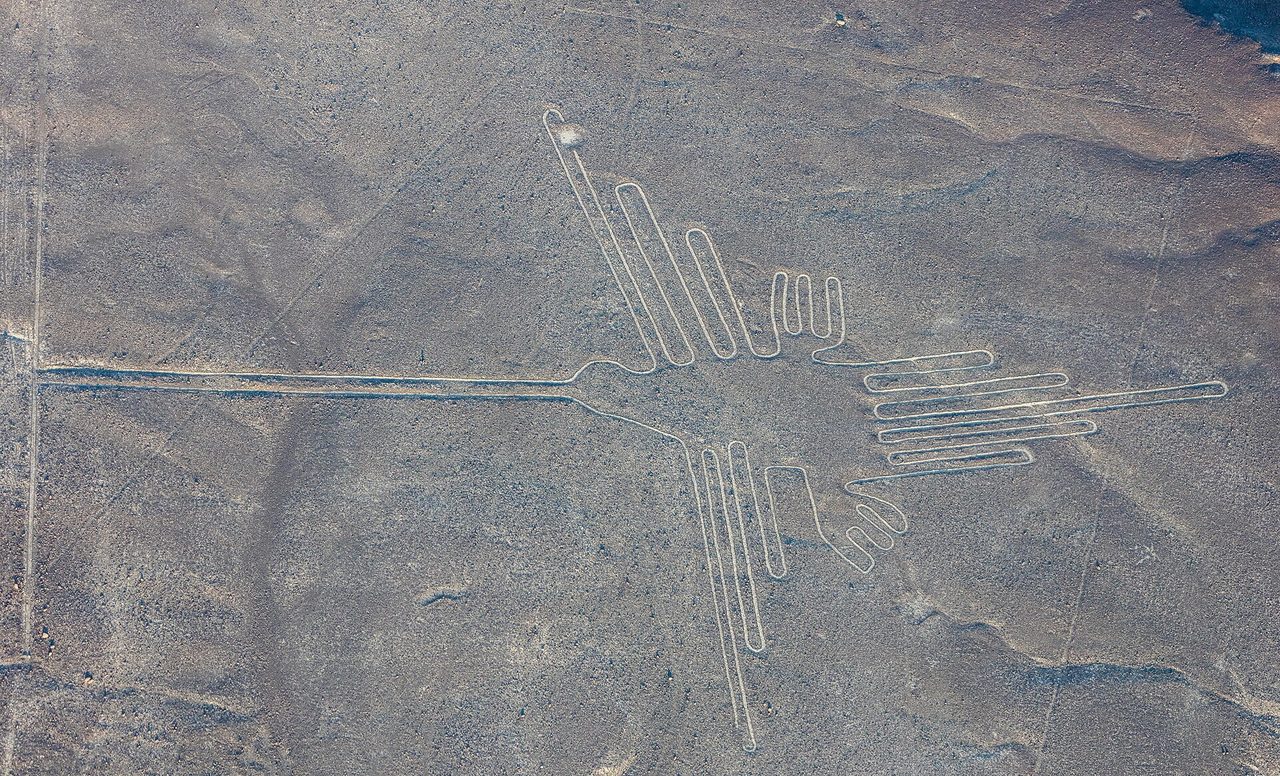
Why? Pick your theory. Maria Reiche — the German mathematician who spent five decades from the 1940s measuring, mapping and personally sweeping the lines, sleeping in a desert shack and chasing off vandals with little more than force of personality — believed they formed an astronomical calendar. The current scholarly favourite ties them to water and fertility ritual: many lines point toward water sources, and the figures echo creatures associated with rain. What’s settled is who: the Nazca culture, whose pottery and irrigation systems litter the valley, and whose desperate hydraulic ingenuity you can still watch working at the Cantalloc aqueducts. The lines earned UNESCO World Heritage status in 1994, and remain, by any sane measure, one of the great unexplained achievements of the ancient world.
The flight: what it costs and whether it’s safe
From the ground the lines are rumours. From 300 metres up they are suddenly, shockingly there, and the only way to get that view is a small-plane flight from Nazca’s little airfield. The standard tour lasts about 35 minutes in a Cessna-class aircraft seating four to twelve, every seat by a window, overflying a dozen or more major figures while the pilots bank steeply left then right so both sides get the same view. Sticker prices run $85–120 depending on season and how you book; add the 30-sol airport tax and you’re realistically at $100–160 per person all-in. Flights also leave from Pisco and Ica airports at a premium — convenient if you’re not overnighting in Nazca, but you’ll pay $230 and up for the longer flight.
The safety question deserves a straight answer, because the industry had a grim patch fifteen-odd years ago. After fatal crashes around 2010, Peru’s civil aviation authority tore the sector down and rebuilt it: two pilots in every cockpit, mandatory collision-avoidance systems, stricter maintenance audits and consolidation into a handful of certified operators. The record since has been dramatically better. Book an established name like AeroNasca or AeroParacas directly, fly in the morning, and the biggest genuine risk is your breakfast: the constant banking is rough on stomachs. Fly before 11am when the air is calm and thermals haven’t built, eat lightly, take a motion-sickness tablet half an hour before, and fix your eyes on the horizon between figures.
Flight or tower? An honest comparison
If the flight is out of budget or your inner ear vetoes it, there’s a plan B: the 13-metre Mirador observation tower right on the Panamericana, 25 minutes north of town, plus the natural lookout hill nearby. Here’s how the options really stack up:
| The flight | The Mirador tower | |
|---|---|---|
| Cost | $100–160 all-in | 4 soles entry, ~6 soles each way by bus from Nazca |
| What you see | 12–16 major figures, full scale and layout of the pampa | Three figures — Tree, Hands and (split by the highway) Lizard — at an oblique angle |
| Time | ~2 hours with transfers and faff | ~1.5 hours round trip |
| Stomach risk | Real: steep banking both directions | None, unless you fear ladders |
| Verdict | The full experience; worth saving for | A solid taster, and a sobering close-up of how fragile the lines are |
My take after doing both: the tower is good; the flight is unforgettable. If the geoglyphs are a primary reason you’re in Peru, fly. If they’re a curiosity en route to Arequipa, the tower delivers a satisfying look for the price of a coffee.
Nazca beyond the lines
I budgeted one night for Nazca and stayed three, because the town quietly hoards more pre-Columbian wonders than anywhere on the coast.
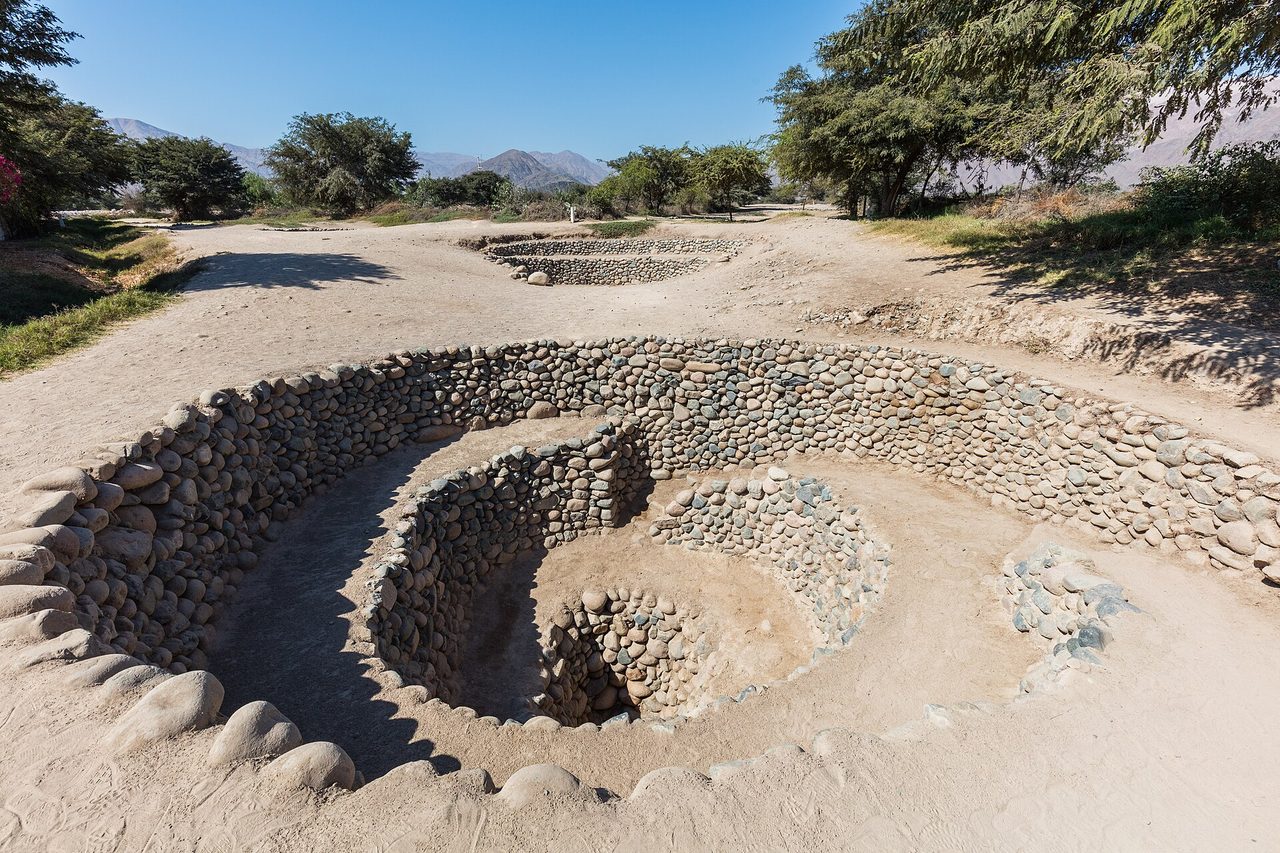
The Cantalloc aqueducts, a half-hour walk from the plaza, are the Nazca culture’s masterpiece of survival engineering: underground channels still carrying mountain water beneath the desert after 1,500 years, punctuated by elegant stone spirals called puquios that wind down into the earth like inverted snail shells — part access ramp, part wind-driven pump, and still maintained by local farmers who quite reasonably refuse to fix what isn’t broken. Entry is about 10 soles and it’s worth every centavo.
Half an hour south, the Chauchilla cemetery is the desert at its most unnerving: open tombs of cloth-wrapped mummies sitting cross-legged under thatch shelters, dreadlocked hair intact after a millennium, the sand around them still glittering with bone shards and pottery the grave-robbers didn’t want. Out west, the sprawling adobe pyramid city of Cahuachi — the Nazca’s great ceremonial centre, only fractionally excavated — rises from the dunes like something half-dreamt. The Museo Antonini in town pulls the whole civilisation together, and the little Maria Reiche planetarium runs nightly star shows that map the lines against the heavens she believed they mirrored. And looming over it all is Cerro Blanco, at 2,078 metres one of the highest dunes on Earth: a savage three-hour pre-dawn climb from the road, then the longest sandboard descent of your life. Tours leave Nazca at 4am, and your calves will file a formal complaint.
San Fernando, the wild marine reserve southwest of town where condors patrol a coastline full of sea otters and guanacos, makes a spectacular full-day trip if you have a spare one — it’s the Paracas reserve with the volume turned up and the crowds deleted.
Building your Peru southern coast itinerary
How long you give this stretch depends on what kind of traveller you are, but here’s the honest math on the most common options.
One day (the Lima blitz)
Agencies in Lima sell a single-day Paracas-plus-Huacachina tour: depart around 4am, boat to the Ballestas, lunch in Paracas, buggy and sandboard at golden hour, back in Lima past midnight. I’ve met people who loved it and people who described it as Stockholm syndrome with sand. It exists, it’s roughly $90–120, and if one day is what you have, it beats nothing — but you’ll spend more hours on the bus than at the sights, and Nazca doesn’t fit at all. If a day trip is truly your only window, think hard about whether those hours serve you better in Lima itself.
Two days
The minimum that feels like travel rather than logistics. Day one: morning bus to Paracas, afternoon in the national reserve, seafood dinner in El Chaco. Day two: 8am Ballestas boat, midday hop to Huacachina, 4pm dune buggy and sunset, night bus onward or back to Lima. Fast, but nothing feels amputated.
Three to four days (the sweet spot)
Add a Nazca day — bus down from Ica in the morning, fly the lines after lunch or the next morning, see the aqueducts, sleep there or catch the night bus to Arequipa — and you’ve covered every headline on the coast without a single 4am start except the one you chose at Cerro Blanco. Four days lets you breathe: a bodega afternoon in Ica, a lazy lagoon morning in Huacachina, the Julio Tello museum in Paracas.
A week
Only for desert converts, but it’s a glorious week: everything above at half speed, plus Tambo Colorado, Laguna Morón (a smaller, wilder oasis near Pisco you might get entirely to yourself), San Fernando, and long unscheduled hours watching sand change colour. If you have a full week spare in a typical Peru trip, though, most travellers will get more from splitting it with the Sacred Valley or Lake Titicaca. My Peru itinerary guide shows how the coast slots into trips of every length.
Getting there and around
This is the easiest region in Peru to travel independently, full stop. The premium bus companies — Cruz del Sur and Oltursa are the ones I use — run multiple daily departures from Lima’s Javier Prado terminals with huge reclining seats: figure $15–25 and 3.5–4.5 hours to Paracas, much the same to Ica, and 7–8 hours to Nazca. The hop-on-hop-off operator Peru Hop runs the same circuit with hotel pickup in Lima and flexible onward dates, which costs more than point-to-point tickets but removes every bit of friction for first-timers; their buses also detour to sights like the Hacienda San José slave-tunnels en route.
Local connections are simple: Ica’s bus terminals are a 10–15 sol taxi from Huacachina (there’s no bus to the oasis itself), Paracas–Ica runs hourly on several lines for a few soles, and Ica–Nazca takes about 2.5 hours. Coming the other way, night buses from Arequipa reach Nazca in 9–10 hours and Cusco in 14, so plenty of travellers do this coast northbound as a grand finale, finishing with the dunes. Full bus-by-bus detail, including how to survive Peruvian night buses with your luggage and lower back intact, lives in my getting around Peru guide.
When to go
Here’s the counterintuitive bit: the coast’s seasons run opposite to the Andes. Peruvian summer — December through March — is when this desert is at its blazing best, 27–30°C and cloudless, which is exactly when trekking season in the mountains is a washout. Winter (May to October) brings the garúa, a grey sea-mist that flattens the light in Paracas and can turn mornings cool and damp, though Huacachina and Nazca sit far enough inland to stay sunny and warm nearly year-round.
Practical upshots: morning boats run all year, Nazca flights operate year-round but cancel more often for summer haze and winter coastal fog (another argument for booking the early slot and building in a buffer day), and the dunes don’t care what month it is — though in mid-summer the sand gets too hot to climb barefoot by 10am. Paracas wind is a daily rhythm, not a season: calm mornings, gusty afternoons, every single day. If you’re sequencing the coast with Machu Picchu and the mountains, the shoulder months of April–May and September–November treat both kindly; my best time to visit Peru guide breaks the trade-offs down month by month.
Where to stay along the route
You have three plausible bases, and I’ve used them all. Paracas suits wildlife-first travellers and anyone who likes falling asleep to waves; it has everything from backpacker dorms to genuine resort hotels on the bay, and you’ll want one to two nights. Huacachina is the scenic, sociable choice — sleeping inside the dune bowl is special enough to forgive the party noise; pick your hostel by its sound insulation or stay in Ica city for silence and better-value hotels. Nazca is a functional overnight: simple, friendly hotels around the plaza, with the marvellous La Encantada-class mid-rangers costing half what they would in Cusco. Wherever you stay, book ahead for January–February weekends and Vendimia, when limeños descend on the entire coast.
What it all costs
The southern coast is one of the cheapest legs of any Peru trip. A realistic daily budget, on top of transport: backpackers get by on $35–45 a day with dorm beds, menu lunches and group tours; mid-range couples spend $70–110 a day each with nice hotels and every activity. The big-ticket item is the Nazca flight, and it’s worth every dollar — budget for it from the start, skip it consciously, but don’t let it ambush you. Tally the whole route — buses, three nights, Ballestas, reserve, buggy, flight, food — and you’re looking at roughly $250–400 per person for four days at mid-range comfort. How that folds into a whole-trip number is covered in my Peru trip cost guide.
Practical tips I learned the sandy way
Bring more cash than feels necessary: ATMs exist in Ica and Nazca but are scarce in Paracas and absent in Huacachina, and almost every tour desk quotes better prices in soles. Sunglasses are not optional on a buggy — they’re protective equipment — and a buff or bandana over your mouth makes the difference between a great tour and eating a sandcastle. Phones die in sand: a zip-lock bag costs nothing and a lens full of grit costs a camera. Book the Nazca flight and the 8am Ballestas boat a day or two ahead in high season; everything else on this coast can be arranged the evening before from any hostel desk, usually for less than online. Carry your passport — flights and some reserve tickets require it. And if you’re heading on to altitude afterwards, enjoy the fact that down here, for once in Peru, you can exert yourself recklessly at sea level. The mountains and the Inca Trail will collect their debts later.
How the coast fits the bigger Peru picture
The classic gringo-trail sequence runs Lima → southern coast → Arequipa → Titicaca → Cusco → Machu Picchu, and it’s popular because it works: the coast eases you in at sea level while the sights escalate, and each overnight bus leg is shorter than flying-plus-faffing would be. Done this way, the desert days double as acclimatisation insurance — you arrive in 2,335-metre Arequipa rested rather than wrecked. If your trip is shorter and Machu Picchu-centred, the two-day coast loop still slots neatly between landing in Lima and flying to Cusco. Either way, this stretch earns its place on any list of the best things to do in Peru — and unlike most of that list, it asks for no permits, no porters and no altitude pills.
Peru southern coast FAQ
How many days do you need for Paracas, Huacachina and Nazca?
Three days covers all three headline stops at a humane pace: Paracas day one, Ballestas boat and Huacachina dunes day two, Nazca and the flight day three. Two days works if you drop Nazca; four lets you add Ica’s bodegas and actually exhale. One day from Lima is possible for Paracas and Huacachina only, and it’s a long, long day.
Is Huacachina worth visiting?
Yes — with calibrated expectations. The village is a tiny, touristy ring of hostels and the lagoon won’t win any beauty contests up close. But the dune field around it is vast and graceful, the buggy-and-sandboard tour is the most fun $20 buys in Peru, and sunset from the crest is a top-five travel moment. Go for the sand, not the swimming.
Is Paracas worth it if I’ve seen wildlife elsewhere?
If you’ve cruised the actual Galápagos, the Ballestas will feel familiar at a hundredth of the price. The reserve, though, stands on its own: the red beach, the sea-cliff desert and the scale of the emptiness aren’t replicated anywhere else in Peru. Wildlife people should also consider it a warm-up for the Amazon, where the biodiversity goes vertical.
Can you do Paracas and Huacachina in one day from Lima?
Yes — tours leave Lima around 4–5am and return after midnight, packing in the Ballestas boat, lunch, and a sunset buggy session for roughly $90–120. It’s a legitimate option for the time-poor, but you’ll log 9+ hours of driving in one day. If you can possibly spare a night, spare it.
Are the Nazca Lines flights safe?
The industry was overhauled after crashes around 2010: every flight now carries two pilots, collision-avoidance tech is mandatory, and operators are consolidated and audited. The safety record since has been strong. Book a certified operator directly, prefer morning slots, and treat motion sickness — not the flying — as the realistic worry.
How much does the Nazca Lines flight cost?
Advertised fares run $85–120 for the standard 30–35 minute flight from Nazca’s airfield, plus a 30-sol airport tax paid in cash, so realistically $100–160 per person. Longer flights including the Palpa figures, and departures from Ica or Pisco airports, cost more — up to about $280.
Is the Nazca observation tower worth it instead of flying?
For 4 soles, the roadside Mirador shows you the Tree and the Hands close enough to appreciate how the lines were made — and how terrifyingly fragile they are. It’s a genuinely good budget alternative, but it shows you three figures where the flight shows you the whole canvas. If the lines are why you came, fly.
When is the best time to visit Peru’s south coast?
December to March brings hot, blue-sky desert summer (and the March grape harvest); May to October brings coastal mist to Paracas while Huacachina and Nazca stay warm and dry. There’s no bad month — which makes the coast the perfect counterweight to the Andes’ strict dry season. April–May and September–November are the kindest months for combining both.
Should I visit Paracas or Huacachina first?
Paracas first, then Huacachina, then Nazca — it matches the geography heading south and the natural daily rhythm: boats run mornings, buggies peak at sunset, flights are smoothest before 11am. Doing it in reverse from Arequipa works equally well; just flip the order.
Do I need to book tours in advance?
Only two things merit pre-booking: the Nazca flight (a day or two ahead, more in January–February) and accommodation on summer weekends. Ballestas boats, reserve tours and buggy sessions are sold every ten metres in Paracas and Huacachina, often cheaper in person than online. Book buses a day ahead for the times you want.
The southern coast was the stretch of Peru I nearly cut for being “on the way” — and it turned out to be the part I describe first when anyone asks about the country. Penguins before breakfast, a wine older than the conquest at lunch, a sunset from a dune the size of a cathedral, and a two-thousand-year-old hummingbird the next morning. Some detours are the destination. Save it a spot on your itinerary, and don’t say I didn’t warn you about the sand: three weeks later, I was still finding it in my shoes.